 Derya Yoruk
How much resolution is really needed? Part 1
What is the optimal industrial imaging resolution? Make the right choice on camera resolution, data size, and sensitivity for your project.

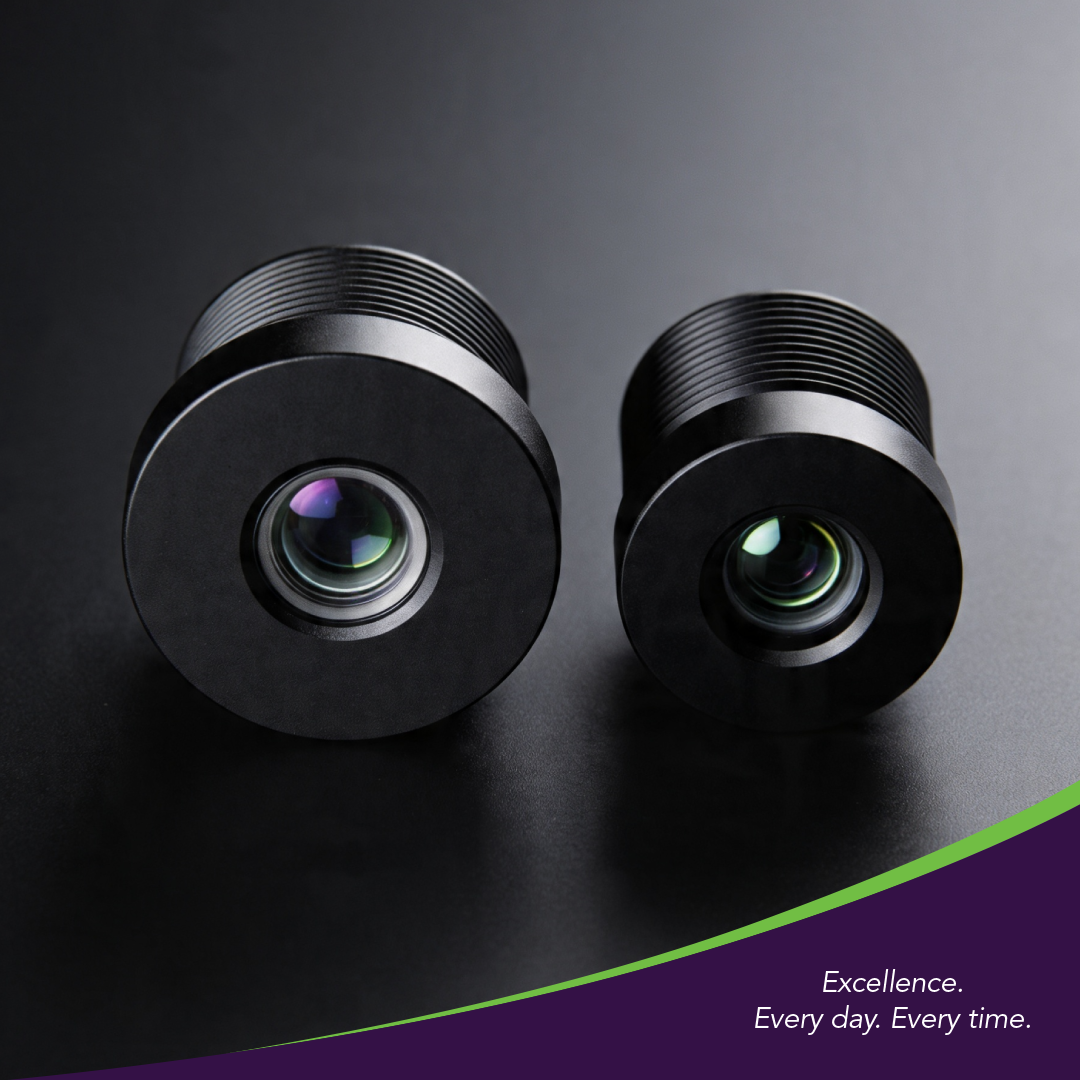
In embedded vision systems, image quality is often associated with the camera sensor. However, the lens plays an equally critical role. A high-resolution sensor alone cannot deliver optimal results if the lens is not properly matched to it.
This becomes especially important as imaging systems transition to higher resolutions and larger sensors. Selecting the correct lens directly impacts resolution, field of view, distortion, and overall system performance.
This article explores the key factors that influence lens selection and how they affect image quality in embedded vision systems.
One of the most important considerations in lens selection is ensuring proper alignment between the lens image circle and the sensor size.
For instance, the Videology 801 IP camera features a 1/1.8 inch STARVIS 2 sensor with 3840 x 2160 resolution and 2.0 µm pixel size. This sensor not only enables high-resolution imaging but also delivers strong performance in challenging lighting conditions.
Low light capability is a defining requirement in many industrial, medical, and aerospace applications. The STARVIS 2 sensor provides 0.05 lux color sensitivity and enhanced near-infrared (NIR) response in the 780 to 1000 nm range, enabling usable color imaging in near-darkness and reliable operation under NIR illumination.
However, achieving this level of performance depends on more than the sensor alone. The lens also must be capable of fully supporting both the resolution and the sensor format.
A key requirement is matching the lens image circle to the sensor size. If the image circle is too small, the system will experience:
To ensure full utilization of this particular sensor, Videology has added two M12 lenses designed to support larger image formats:
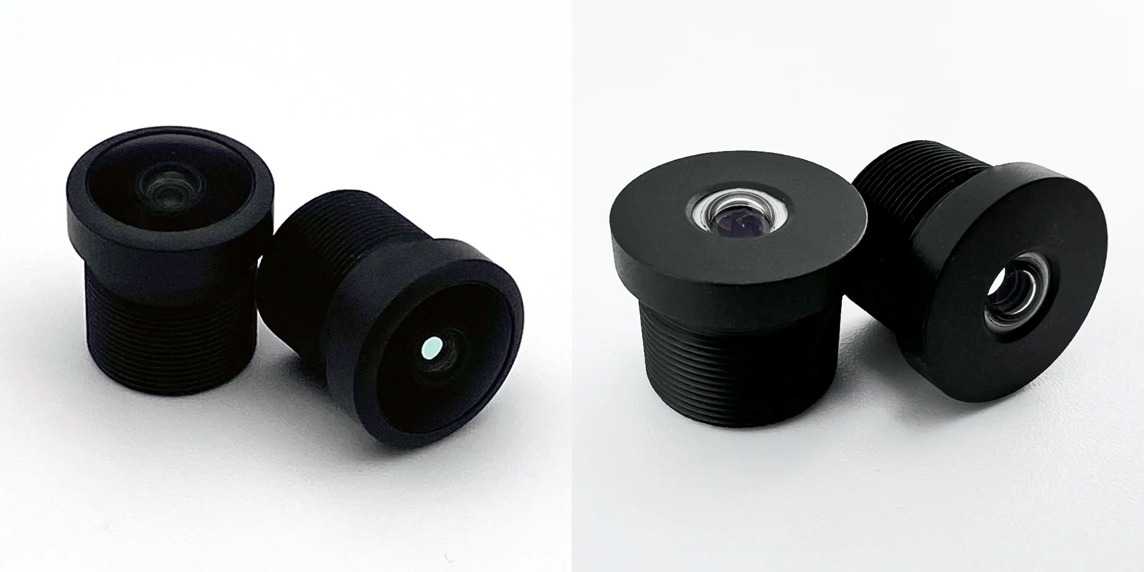 The 3.5mm 8MP M-12 Lens (left) and 5.5mm 8 MP M-12 Lens options from Videology
Both lenses support image formats up to 1/1.7 inch with image circles of approximately 9.2 mm to 9.3 mm, ensuring full sensor coverage and enabling the 801 IP camera to achieve its full 4K imaging performance.
This alignment between sensor and lens is essential not only for resolution, but also for preserving image quality in low light and NIR conditions, where edge performance and light transmission directly impact overall system effectiveness.
Focal length determines the field of view and directly influences how much of a scene is captured.
The two lenses provide different perspectives:
In environments such as aircraft cabins, industrial spaces, or surveillance scenarios, selecting the appropriate field of view is essential. A wider lens may capture more context, while a longer focal length can improve subject detail and identification.
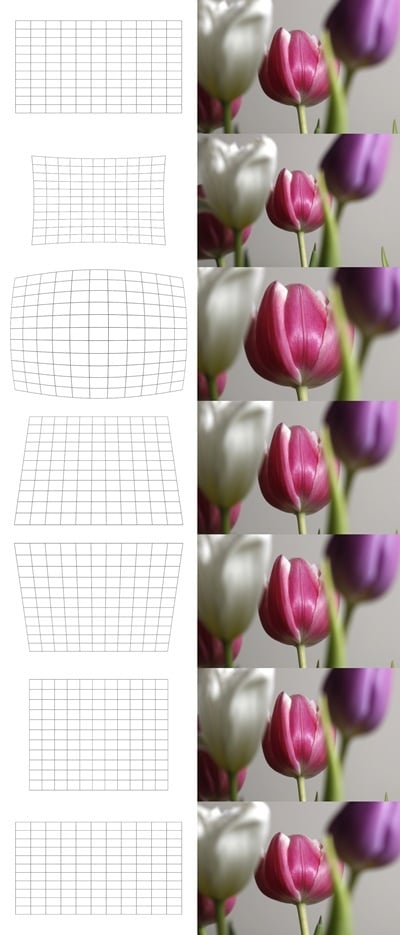 Distortion Trade-offs
Wide-angle lenses often introduce distortion, particularly toward the edges of the image. Understanding these trade-offs is important when image accuracy is critical.
In many embedded applications, distortion can be corrected through software. However, selecting a lens with appropriate optical characteristics can reduce processing requirements and improve overall image fidelity.
The Videology 801 IP camera currently utilizes an M12 mount.
M12 lenses are widely used in embedded systems due to their compact size and integration flexibility. However, pairing M12 lenses with larger sensors introduces design challenges, particularly in maintaining image quality across the full sensor area.
The newly added lenses address this challenge by:
This enables system designers to achieve high-resolution imaging without transitioning to larger lens mounts.
Applications such as industrial monitoring, medical systems, aircraft interiors, and low-illumination surveillance demand reliable performance in challenging lighting conditions.
Both lenses feature fast apertures:
These optical characteristics support improved light transmission, allowing the 801 IP camera to perform effectively in low light environments while maintaining image clarity.
Lens selection directly influences the overall performance of embedded vision systems. As sensor formats expand and resolutions continue to increase, proper alignment between lens characteristics and sensor capabilities becomes increasingly important.
The availability of M12 lenses designed for larger image formats and higher resolutions allows systems such as the 801 IP camera to fully utilize sensor performance.
The result is a complete imaging solution that balances resolution, field of view, distortion, and system integration requirements.
What is the optimal industrial imaging resolution? Make the right choice on camera resolution, data size, and sensitivity for your project.
IP camera latency depends on image capture and processing settings, data transmission over the network, and display on the viewing device.
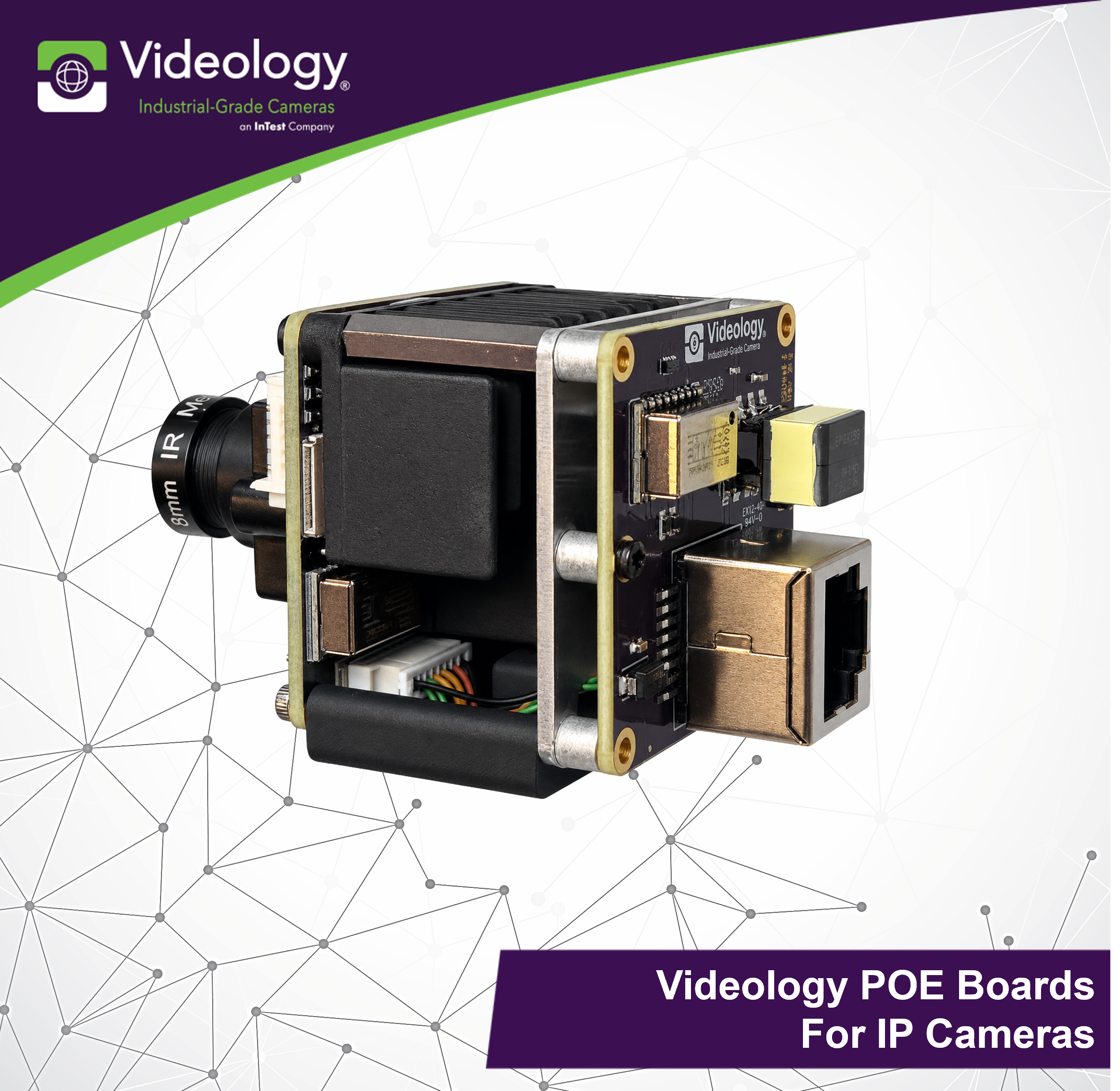
Streamline your IP camera deployments with Videology's new POE board, offering single-cable power and network connectivity for enhanced integration.


